Route 66 & Santa Fe New Mexico Travel Guide: Arts, History & Culture
Route 66, Santa Fe, & the Stories That Made America's Most Fascinating Destination. Listen to the Travels with Darley Podcast Where the Mother Road Meets Centuries of Art, History & Culture in New Mexico
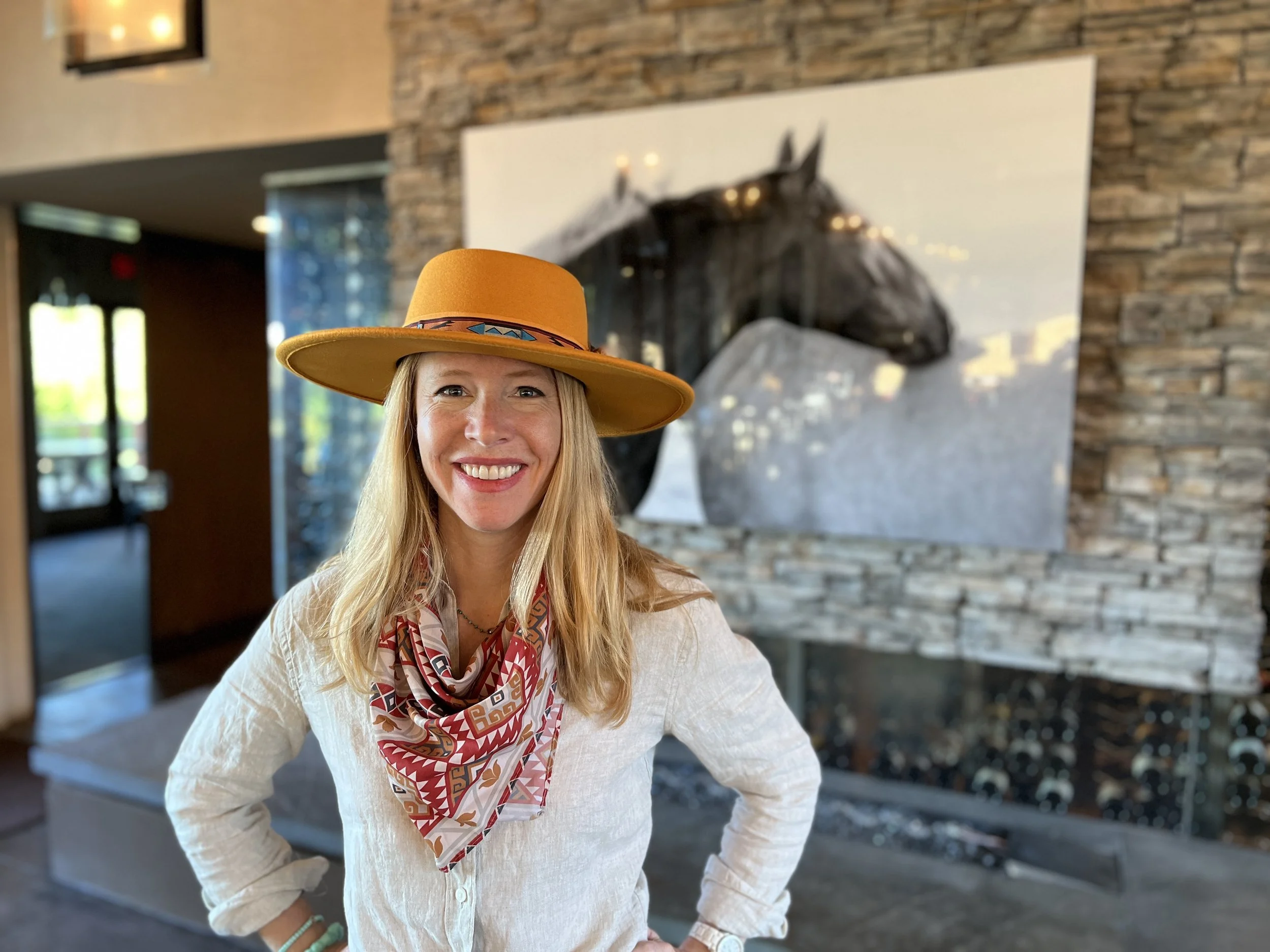
Explore Route 66 in Santa Fe, NM with Darley Newman — from the Miraculous Staircase at Loretto Chapel to Native hoop dance at Pojoaque Pueblo and monumental sculpture at the Allan Houser Sculpture Garden.
Route 66 runs through the heart of Santa Fe, New Mexico — and so does one of the most layered, surprising, and inspiring travel stories in America. In this episode of the Travels with Darley Podcast, Emmy Award-winning host Darley Newman takes listeners on an immersive journey through Santa Fe's historic Plaza, centuries-old chapels, Native American traditions, world-class sculpture gardens, and the living legacy of the Mother Road — all within one of the oldest capital cities in the United States.
Whether you're planning a road trip along Route 66, looking for the best things to do in Santa Fe, or simply want to travel deeper into American history and culture, this guide — drawn directly from Darley's on-the-ground exploration — is your companion for the journey.
Route 66 in Santa Fe — A Surprising Chapter of the Mother Road
Many travelers don't realize that Santa Fe was part of the original Route 66 alignment from 1926 to 1937. The Mother Road once passed directly through the heart of downtown, bringing generations of road trippers to landmarks like La Fonda on the Plaza and along the Old Santa Fe Trail.
To mark that history, head to the corner of Old Santa Fe Trail and East Water Street, just steps from the Plaza, where a historic Route 66 sign commemorates the original route. It's the perfect photo stop — and a chance to literally stand where generations of travelers once got their kicks on Route 66.
As Route 66 approaches its 100th anniversary in 2026, Santa Fe is celebrating its place in the iconic American story — a chapter filled with neon signs, motor courts, and the adventurous spirit that defined the golden age of the American road trip.
Listen to the Travels with Darley Santa Fe Podcast
This Santa Fe episode of the Travels with Darley Podcast is available now on iHeart, Spotify, Apple Podcasts, and Amazon. Save it, download it, and take it with you as your personal audio guide to Santa Fe's most memorable experiences.
Loretto Chapel & the Miraculous Staircase
Just steps from that Route 66 sign is one of Santa Fe's most intriguing landmarks: Loretto Chapel, home of the famous Miraculous Staircase. Curator Richard Linsley shared the story with Darley during her visit.
The chapel's story begins in 1873, when the Sisters of Loretto hired French architect Projectus Malay to build their chapel, modeled after Sainte-Chapelle in Paris. When Malay passed away before completing a staircase to the choir loft, the Sisters tried in vain to find someone to build the proposed spiral structure. In desperation, they said a nine-day novena to St. Joseph, the patron of carpenters.
On the last day of the novena, an elderly man with a grey beard arrived in town with a donkey, saying he had come to build their staircase. He worked alone inside the chapel for three months, never allowing anyone to watch. Then he vanished — without being paid, and without leaving any clue as to where the wood came from.
The staircase stands today as one of Santa Fe's most visited and most mysterious landmarks. Many who hear the story believe the carpenter was St. Joseph himself.
Barrio de Analco & San Miguel Chapel — Among the Oldest in America
A short walk from the Plaza leads to one of the most historically significant — and least celebrated — neighborhoods in the entire country. David Blackman of Preserve San Miguel guided Darley through the Barrio de Analco Historic District, a National Historic Landmark settled around the same time as Jamestown, Virginia and Quebec City, Canada.
At the heart of the district stands San Miguel Chapel, widely considered the oldest church in America. A historical document from 1628 references the chapel, placing its construction before that date. Archaeological excavations in 1955 revealed that the chapel was built atop an ancient Indian Kiva — a sacred ceremonial space used for worship since the early 800s.
Mass is still held at San Miguel Chapel today. Inside, worshipers and visitors alike can admire historic religious art, including an altarscreen dating to 1798.
Santa Fe's Historic Plaza, Pueblo Revival Architecture & the Manhattan Project
Downtown Santa Fe is one of the most architecturally and historically dense destinations in North America. Around the historic Plaza, centuries of Native American, Spanish, Mexican, and American history converge in a single walkable neighborhood.
The Pueblo revival architectural style — inspired by historic Pueblo construction techniques and Spanish mission influences — defines much of the city center, with its characteristic contoured adobe walls, vigas (wooden ceiling beams), and flat rooflines. Historic plaques throughout downtown tell stories spanning Native American communities, the transition from Spanish to Mexican governance to American statehood, and even Santa Fe's surprising connection to the Manhattan Project.
Santa Fe is the oldest capital city in the United States, with roots dating to the early 1600s — and it shows on every block.
Lightning Boy Foundation & George Rivera Studios, Pojoaque Pueblo
Just north of Santa Fe, in Pojoaque Pueblo, Darley stepped inside George Rivera Studios to meet Felicia Rivera — and to hear one of the most moving stories of the entire journey.
George Rivera and his wife Felicia founded the Lightning Boy Foundation, a Northern New Mexico nonprofit dedicated to teaching traditional Native hoop dance to Indigenous youth. Felicia showed Darley a vibrant painting George created of their son Valentino, dressed in traditional regalia with intricate beadwork and ribbons, performing the hoop dance he loved.
Valentino's passion for hoop dance began when he saw it performed and knew immediately it was something he wanted to do for the rest of his life. After Valentino and his sister were in a car accident — leaving Valentino with brain and spinal cord injuries — he continued to teach hoop dance from his recovery and remained a vital part of the hoop dance community until he passed away. His final wish was to be remembered as a dancer.
The Lightning Boy Foundation grew from that wish. Today it carries Valentino's legacy forward, giving Native youth a foundation in traditional hoop dance and the freedom to tell their own stories through movement.
Hoop dance, which originated in the Pueblos of New Mexico, was traditionally performed to promote health and wellness. At Lightning Boy Foundation, it continues to do exactly that.
Origami in the Garden — Where the Turquoise Trail Meets the Frank Lloyd Wright School
Along the historic Turquoise Trail National Scenic Byway — a beautiful driving route south of Santa Fe well worth adding to your road trip itinerary — artist and entrepreneur Kevin Box and his wife created one of New Mexico's most unexpected art experiences: Origami in the Garden.
Their studio was master-planned by the Frank Lloyd Wright School of Architecture, with large-scale origami sculptures rising dramatically out of natural rock formations. Kevin shared with Darley the philosophy behind his work — combining the ancient fragility of paper folding with the enduring permanence of bronze and metal casting, a practice dating back 6,000 years.
"I really feel like we're more like in a band — an origami band," Kevin told Darley, describing his collaborative approach with fellow artists. The result is a series of monumental, museum-quality works that invite visitors to see origami not just as a craft, but as fine art at an architectural scale.
Allan Houser Sculpture Garden — A Chiricahua Apache Artist's Legacy in the High Desert
South of Santa Fe, set against sweeping New Mexico vistas, the Allan Houser Sculpture Garden offers one of the most powerful outdoor art experiences in the American Southwest. David Redding guided Darley through the garden, where more than 70 monumental sculptures in bronze, steel, and stone illuminate the life and vision of renowned Chiricahua Apache artist Allan Houser.
Houser's first major sculptural commission came in 1948, when the Haskell School of Lawrence, Kansas, conducted a nationwide search for a Native sculptor to create a memorial for Indigenous soldiers who died in World War II. Finding no established Indian sculptors, they selected Houser based on the strength of his work as a muralist. He went on to create approximately 1,000 sculptures during his lifetime.
The Allan Houser Sculpture Garden is a place where art and landscape exist in quiet harmony — a fitting tribute to an artist who spent his life bridging worlds.
Plan Your Santa Fe Road Trip
Santa Fe, New Mexico works for every kind of traveler — couples, solo adventurers, multigenerational families, history lovers, art seekers, and everyone in between. While one traveler soaks in thermal waters and another hikes mountain trails, a third can explore galleries or Revolutionary-era historic sites. Then everyone comes together over an extraordinary meal.