Princeton, Washington Crossing & Trenton: Your Revolutionary War Travel Guide to New Jersey's "Ten Crucial Days" with Travels with Darley
New Jersey is known as the Garden State, but if you know anything about American history, you may also know it as the Crossroads of the American Revolution. General George Washington and the Continental Army spent more time here than in any other state, and it's in Princeton, Washington Crossing, and Trenton where the war's most pivotal ten days played out. I'm Darley Newman, and I traveled this stretch of New Jersey for Travels with Darley's Revolutionary Road Trip series, meeting the historians, archivists, and keepers of history who bring the "Ten Crucial Days" to life. If you're an American Revolution traveler planning a New Jersey road trip, this is where to start.
Nassau Hall & Princeton University
Princeton University is the fourth-oldest institution of higher education in the United States, and its campus is where the Battle of Princeton's final chapter played out. Inside Nassau Hall, University Archivist Dan Linke showed me where Alexander Hamilton set up artillery on a nearby hill and fired on British troops occupying the building — and where legend says a cannonball tore through a window and decapitated a portrait of King George II. Whatever really happened to that portrait, the frame was later filled with a painting of George Washington instead. For four months in 1783, Congress met here in Nassau Hall, making it — briefly — the first capitol of the United States.
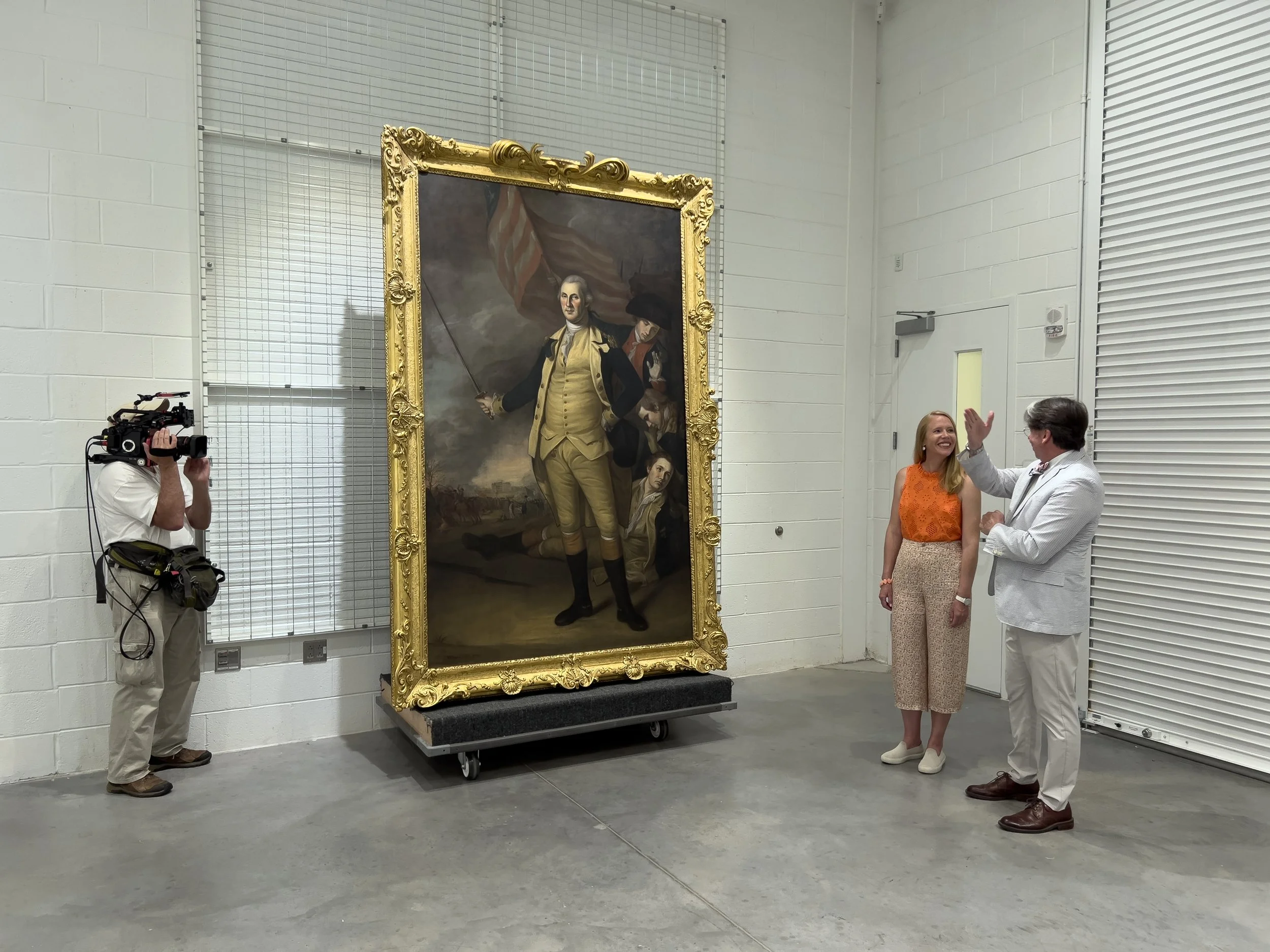
Just off campus, Princeton University Art Museum Director James Steward showed me the original Charles Willson Peale painting of Washington at the Battle of Princeton — painted from life by an artist who fought alongside Washington in the battle itself, and hung in Nassau Hall for over 200 years.
Princeton Battlefield State Park
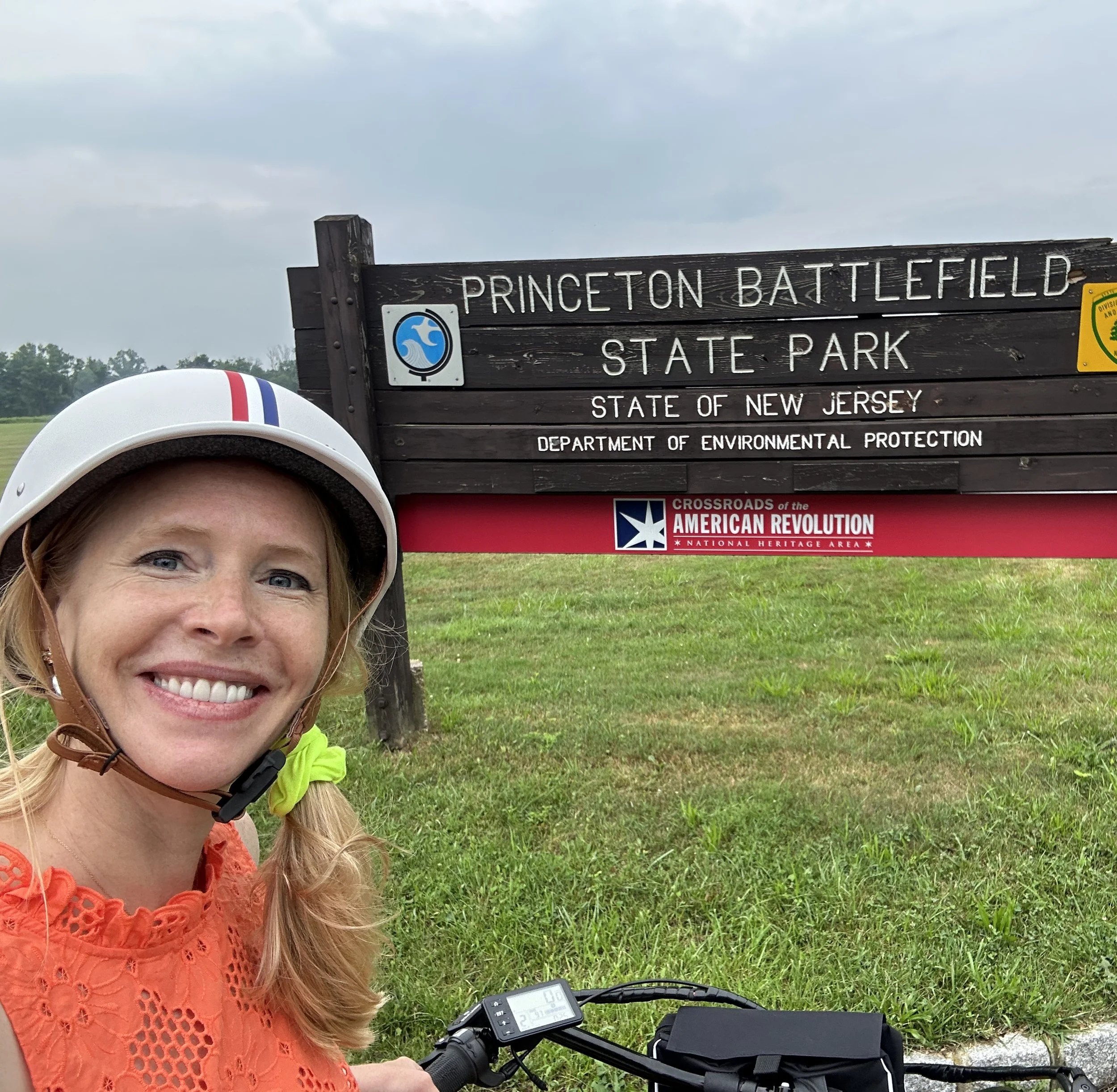
This quiet park was farmland in 1777, when Washington's troops moving north toward Princeton collided with British forces heading south to Trenton. Author Larry Kidder met me here to explain why this battle — the last of the Ten Crucial Days — turned the tide of the war: "The war could have ended if it hadn't been for the Battle of Princeton, but it went on for six and a half years after." Will Krakower shared the story of the Clark family, Quaker pacifists who sheltered in their home's basement during the fighting and afterward chose to treat wounded soldiers from both sides — and of Brigadier General Hugh Mercer, mortally wounded in the battle's final charge. Today you can visit the Clark House and, on the right weekend, meet the reenactors who keep this history visible.
Morven Museum & Garden
Princeton's final stop is Morven, home to Richard Stockton, one of New Jersey's five signers of the Declaration of Independence. Deputy Director and Curator Elizabeth Allen walked me through the door Stockton left from to cast his vote for independence — and the story of his capture by the British in 1776, his forced pardon, and his eventual return to the Patriot cause within the year.
Washington Crossing & Trenton: Where the Ten Crucial Days Began
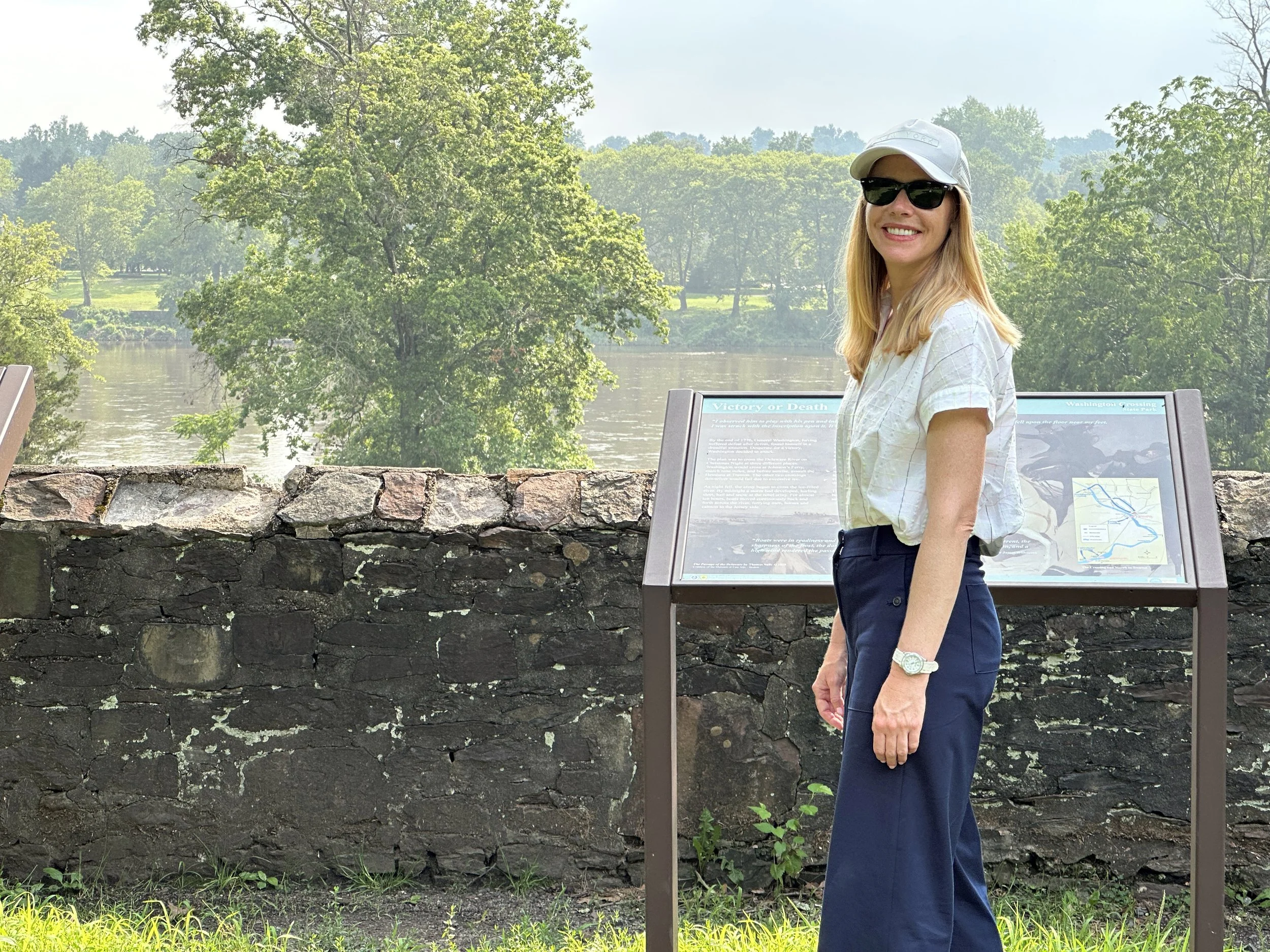
The Ten Crucial Days started roughly nine miles upriver from Trenton, where Washington's plan to move about 2,400 men, 100 horses, and 18 artillery pieces across the icy Delaware River set the whole campaign in motion.
Washington Crossing
Military historian Colin Zimmerman met me on the Pennsylvania side of the Delaware, where replicas of the Durham boats used in the crossing still sit at the water's edge. "If you look at the Delaware River today, it's the 18th-century equivalent to Interstate 95," he told me — the main transportation route to Philadelphia, one of the era's busiest ports. As a nor'easter closed in on the night of the crossing, soldiers from wildly different backgrounds — Anglican Virginians, Puritan New Englanders, former Quakers — had to work together to get the army across. Zimmerman calls that moment the birth of a certain kind of American spirit.
Old Barracks Museum, Trenton
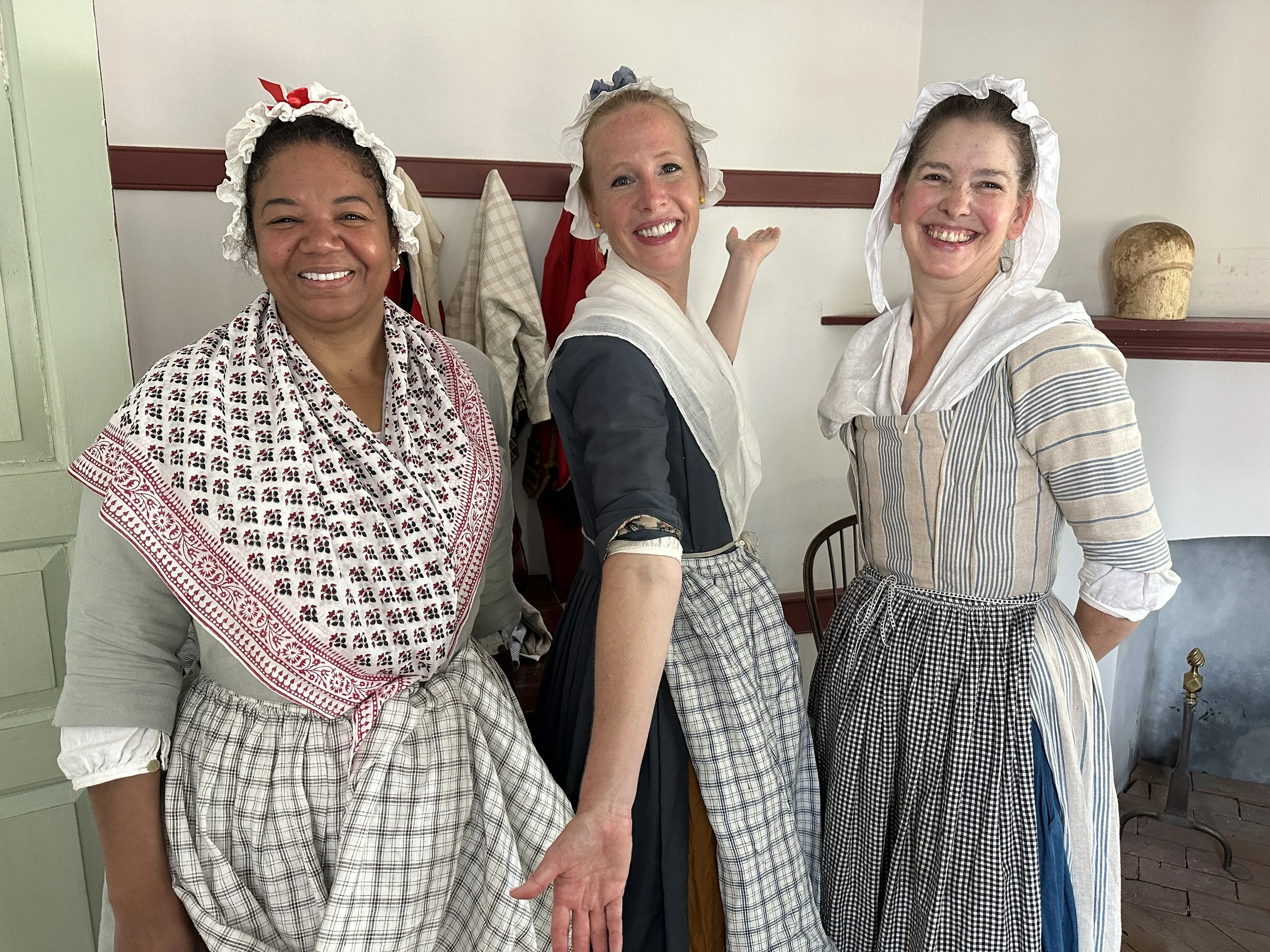
Once across the river, Washington's army defeated the Hessians in Trenton, then won a second battle there the following week. Trenton's Old Barracks, dating to 1758, witnessed both. Executive Director Carrie Fellows and educator Leslie Bramlett helped me dress in authentic colonial clothing — including the stays working women wore for the back support needed to haul 50 pounds of water multiple times a day — and explained that the Barracks also served as a hospital, where women nursed soldiers through smallpox inoculations. More soldiers died of smallpox during the Revolution than were killed in battle, and the Old Barracks was the site of the first mass medical treatment in the Western Hemisphere.
New Jersey State Archives, Trenton
My last stop was the New Jersey State Archives, where Director Joe Klett gave me access to some of the state's rarest founding documents — New Jersey's ratification of the U.S. Constitution (New Jersey was the third state to ratify, hence "the third state"), the state's original Bill of Rights, and one of only 13 surviving original printings of the U.S. Constitution, complete with a cover letter from Washington himself. Klett also shared something most travelers don't expect: New Jersey's own 1776 declaration of independence from the King briefly extended property-based voting rights to women and free Black residents — a right the state didn't fully revoke for 30 years.
History, Food & Culture Beyond the Battlefield
A Revolutionary road trip through Princeton isn't just battlefields and archives — it's also where to eat, drink, and stay.
Yankee Doodle Tap Room — Princeton, NJ
At the Nassau Inn on Palmer Square, the Yankee Doodle Tap Room takes its name from the Norman Rockwell painting hanging behind the bar, commissioned by Edgar Palmer in 1937. Local lore says Albert Einstein — a regular who had tea upstairs most afternoons with fellow scholars from the Institute for Advanced Study — carved his name into the woodwork here as a student prank waiting to happen. Princeton Tour Company's Mimi Omiecinski, who also led me on an e-bike tour past the homes of Grover Cleveland and Woodrow Wilson (two U.S. presidents who lived one block apart), showed me where to look.
Plan your visit: Yankee Doodle Tap Room, 10 Palmer Square East, Princeton, NJ
The Peacock Inn — Princeton, NJ
A few blocks away, the Peacock Inn was once owned by a member of the Continental Congress — and other delegates stayed here too. Innkeeper Eben Copple shared the inn's history over cocktails and upscale American fare. "The history of the place really puts everything in context," he told me. It's still one of the best places in Princeton to grab a meal or stay the night surrounded by that history.
Plan Your Own Revolutionary Road Trip Through Princeton, Washington Crossing & Trenton
Best for: History lovers, American Revolution travelers, archives and museum buffs, families
Located: Central New Jersey, about an hour from both New York City and Philadelphia
Combines well with: A broader New Jersey Revolutionary Road to 250 itinerary, or a Philadelphia weekend trip
Don't miss: Nassau Hall, Princeton Battlefield State Park, Washington Crossing, the Old Barracks Museum, and the New Jersey State Archives
Frequently Asked Questions
What is Travels with Darley's Revolutionary Road Trip?: Travels with Darley's Revolutionary Road Trip is a new book by award-winning TV host and travel expert Darley Newman. Drawing on years of firsthand research and travel across the 13 original colonies, Darley road trips to hidden Revolutionary-era sites, authentic colonial taverns, and battlefields where lesser-known heroes shaped a nation
What Revolutionary War sites can you visit in Princeton, NJ? Princeton's top Revolutionary War sites include Nassau Hall and the Princeton University campus, Princeton Battlefield State Park, and Morven Museum & Garden, home of Declaration signer Richard Stockton. All three are open to the public and central to New Jersey's role in the American Revolution.
Where did George Washington cross the Delaware River? Washington crossed the Delaware River at what is now Washington Crossing, roughly nine miles upriver from Trenton, on the night of December 25–26, 1776, moving about 2,400 troops into New Jersey ahead of the Battle of Trenton.
What were the Ten Crucial Days? The Ten Crucial Days refers to the string of American victories from December 25, 1776 to January 3, 1777 — the Delaware crossing and the battles of Trenton and Princeton — that reversed the course of the Revolutionary War after a string of American defeats.
Is Princeton, NJ a good stop for an American Revolution road trip? Yes. Princeton combines walkable Revolutionary War sites, a major university campus, historic taverns and inns, and easy access to Washington Crossing and Trenton, making it one of the most complete stops on a New Jersey Revolutionary War itinerary.
Keep Exploring New Jersey with Travels with Darley
Looking for more Revolutionary Road Trip inspiration through New Jersey? Check out these related stories:
Princeton, Washington Crossing & Trenton: Your Guide to New Jersey's “Ten Crucial Days”
Your Guide to Union County, New Jersey's Revolutionary War History, Culture & Cuisine
New Jersey Diners, Delis, and Dynasties: Top Restaurants in Passaic County
NJ Spotlight News Features Travels with Darley's Revolutionary Road Trip
South Jersey, NJ Revolutionary Road Trip: Darley Newman's Guide to Taverns & Untold Stories
New Jersey Revolutionary Road Trip: Darley Newman's Guide to Where to Eat & Drink
Want travel tips like these delivered straight to your inbox? Subscribe to the Travels with Darley newsletter, and subscribe to Travels with Darley on YouTube and iHeart to never miss an episode.